What to Think About in Custom Driveline Fabrication for Heavy-Duty Trucks: Repair, Balancing, and Rebuild Fundamentals
Business Name: Anderson Brothers Truck & Equipment
Address: 2640 State Hwy 99 N #1, Eugene, OR 97402
Phone: (541) 688-8686
Anderson Brothers Truck & Equipment
Anderson Brothers Truck & Equipment is a long-established truck parts and repair company located in Eugene, Oregon. Founded in 1949, the business has served the region for more than 70 years, building a reputation as a reliable source for heavy-duty truck parts, custom fabrication, and equipment repair. The company works with commercial vehicle owners, fleets, and equipment operators who need dependable parts and services to keep their trucks operating safely and efficiently.
A core focus of Anderson Brothers is providing specialized services for heavy-duty trucks and equipment. Their shop offers custom driveline fabrication and repair, helping customers build, rebuild, or balance drivelines for a wide range of applications. They also specialize in custom U-bolt bending and fabrication, producing precisely sized components for trucks and other heavy equipment. In addition, the company sells both new and used truck parts, stocking a large inventory and offering local delivery in the Eugene and Springfield areas.
Beyond parts sales, Anderson Brothers provides repair and maintenance services for truck components such as transmissions, differentials, and related systems. Their experienced team focuses on delivering practical, cost-effective solutions that help keep trucks and equipment running reliably. With decades of experience and a commitment to local service, Anderson Brothers Truck & Equipment continues to support the trucking and transportation industries throughout Eugene and surrounding communities.
2640 State Hwy 99 N #1, Eugene, OR 97402
Business Hours
Heavy-duty trucks reside in a world of shock loads, high grades, payload spikes, and long hours at steady speed. The driveline sits at the center of that punishment. When it is right, the truck feels planted, foreseeable, and quiet even under torque. When it is incorrect, the shake travels from the floorboard to the mirror stalks, U-joints scar themselves to death, and equipments begin to chatter. Getting a custom driveline developed or fixed is not a high-end item for show trucks. It is core reliability work, the type of attention that keeps a fleet's expense per mile within forecast and prevents roadside calls that occur at the worst time.
This is a trade where numbers matter as much as the torch. I have viewed experienced fabricators tack, check, and remedy a shaft 3 times simply to claw back a couple of thousandths of runout, due to the fact that they knew that sloppiness here shows up later at 65 miles per hour as heat in an inexpensive provider bearing. The details pay off.
Start with the issue, not the parts
It is tempting to leap to new yokes and thicker tube, but the best custom driveline work begins with a clear diagnosis. Not all vibrations indicate the same repair. A rumble that increases with roadway speed frequently traces to shaft balance, tire or wheel concerns, or a bent tube. A pulsing under heavy throttle at low speed can be U-joint brinelling, used slip splines, or a bad provider bearing. A harmonic that peaks near a particular highway speed mean a critical speed problem. Getting orientation from those patterns saves money and steers every option that follows, from tube size to joint series to whether you split a long single shaft into a two-piece with a midship bearing.
I keep notes from test drives. Develop the routine of logging when the vibration appears, what equipment, throttle position, speed, and whether it fades during coast or grows under load. That page becomes your construct spec as much as any measurement.
Measure for fitment like it is aerospace
A durable shaft that is the wrong length, or the right length with the incorrect operating angle, is still a failure. Set ride height initially, with the truck as it will live when working. Air suspensions ought to be at regular driving height. Raised leaf trucks ought to have pinion angle set where it belongs, locked down with appropriate hardware. This is where Custom U Bolts show up in the real world. If you utilize shims under leaf springs to correct pinion angle, those shims change the stack height, and you need longer U bolts with full thread engagement and correct torque. Sloppy securing lets the axle rotate under load, which eliminates U-joints and splines.
For measurements, be precise and constant. Tail real estate flange to pinion flange is the common baseline, but mixed flange patterns or half-round yokes change how you determine and what adapters you may need. Note pilot diameters, bolt circle diameters, and spline count at the slip. On heavy trucks I still see 3 different yoke sizes on the exact same vehicle: 1710 at the transmission, 1760 midship, and 1810 at the axle. Mixing these inadvertently complicates balance and service.
A couple of key figures assist length: aim for mid-travel at the slip when the truck sits at ride height. Leave enough plunge for complete suspension compression without bottoming, and enough extension for droop without shaft pullout. On long wheelbase tandems, that can be an inch or more each way, depending upon geometry. Mark phasing before teardown. On two-piece shafts, the front and back need to be timed properly to cancel speed variations. If the truck showed up with a misphased shaft, do not copy the mistake. Appropriate it.
Here is a compact checklist I utilize before devoting to tube size or yokes:
- Driveline length at ride height and at full bump and droop
- Flange types, pilot sizes, bolt circle, and U-joint series at each end
- Operating angles at transmission output, provider bearing, and pinion, within 0.5 degree match where required
- Slip spline travel available vs needed, including seal land and stop-to-stop distances
- Frame mounting points and rigidness for any provider bearing or midship support
Materials and tube sizing are torque mathematics, not guesswork
Most sturdy drivelines use DOM steel tube, frequently 1020 or 1026. Wall thickness generally falls between 0.120 and 0.188 inch, with outside sizes of 3.5 to 6 inches depending on torque and length. Chromoly, like 4130, shows up in serious task or high rpm environments however is not typical in occupation trucks due to the fact that the cost hardly ever purchases proportional benefit for the rpm range. Aluminum shafts have weight advantages, however in heavy service they can trade dent resistance and long-lasting sturdiness for a weight number that does not change revenue. For a lot of fleets, stout steel pages the bills.
Bigger tube increases bending tightness and raises important speed, but it changes clearance to crossmembers, exhaust, and brake plumbing. On a long shaft, the step from 4 inch to 5 inch OD can move an important speed from roughly 2,800 rpm to 3,400 rpm, a cushion you will feel at highway cruise. Those are estimate, not a substitute for estimation. If you are within a few hundred rpm of your cruise shaft speed, do not bet. Change the tube, split the shaft with a provider, or adjust ratio if your use case permits it.
Weld yokes and midship stubs should match the tube size and wall so the weld joint has even heat input and uniform strength. You want a tidy V-groove, steady feed, and full penetration truck parts Anderson Brothers Truck & Equipment without burn-through shoulders. Many shops will pre-heat much heavier areas and finish with a correcting pass before balance. A driveline that looks straight to the eye can still reveal 0.020 inch total showed runout. The target is generally under 0.010 inch TIR on television and 0.004 to 0.006 at the weld shoulders for durable shafts. The straighter it is, the less weight you will be stacking during balance.
U-joint series, yokes, and phasing matter like equipment choice
Pick U-joint series based upon torque and joint angle, not what was on the rack. Typical heavy-duty series include 1710, 1760, 1810, and 1880. Capacity differs with operating angle and lubrication, however as a rough guide, moving from 1710 to 1810 is a significant dive in torque rating and cap size. Full-round yokes with bolted bearing caps hold better under shock than strap-style half-rounds, and they tolerate re-torque cycles better. Do not blend strap bolts across brands. Bolt length, shoulder, and thread pitch vary, and the wrong bolt uses an incorrect sense of clamp. Many 1710 to 1810 cap bolts land in the 70 to 120 lb-ft torque range. Constantly validate from the yoke maker's specification sheet.
Phasing is non-negotiable. The front and rear joints on a single shaft must sit on the exact same aircraft. If one ear is clocked a few degrees out, the shaft presents a second-order vibration that balance can not repair. On two-piece systems, the phasing modifications in foreseeable methods to cancel speed ripple across the carrier. If you are not certain, set the assistance angles, then search for the appropriate clocking for the specific plan. An incorrect guess appears on the first test drive.
Angles, carrier bearings, and why one degree can matter
U-joints like to move. A joint that runs at exactly zero degrees never turns its needles, which chews flats in the bearings, then grows vibration under light load. Aim for 1 to 3 degrees of running angle at each joint on a single shaft, with the transmission output and pinion angles equivalent and opposite within approximately half a degree. That range keeps the needles alive without developing a big sine-wave in speed.
Two-piece shafts follow comparable logic however add the carrier. Set the provider bracket so that the front and rear areas each live in a comfy angle window. Attempt to keep the front shaft short and stiff to push vital speed higher. On long wheelbase tractors, splitting the total length into a front shaft around 40 inches and a back that matches the axle spacing often keeps both within safe rpm.
Carrier bearings should have real installing. A soft or cracked rubber assistance, a bent bracket, or a frame crossmember that can bend under load will appear as oscillation that ruins a mindful balance job. Mount the provider on clean, flat steel, and shim to set height instead of slotting holes. If you change height, reconsider angles at every joint.
Balancing and vital speed: understand your numbers
A sturdy shaft should be dynamically stabilized at a speed that represents how it will live. Shops differ in method, however stabilizing at or above the shaft's anticipated highway rpm gives the very best read. Adding weights to hit no is not the objective if television or yokes are not directly. Proper gross runout initially, then balance. A common heavy truck shaft can be stabilized to a recurring level in the area of a couple of gram-inches, often tighter on much shorter, stiffer pieces. If a shop needs to stack a handful of slugs around the area, you likely missed out on a straightening step.
Critical speed is the rpm where the shaft's very first bending mode gets thrilled. Long, thin shafts struck it at surprisingly low speeds. Here is a useful method to think about it. Suppose a tandem dump uses a single rear shaft determining about 72 inches of exposed tube, 5 inch OD, 0.125 wall. That shaft's first critical might sit around 3,000 to 3,200 rpm depending upon end restraints and material. With 4.10 gears and 11R22.5 tires, shaft rpm at 65 mph could be approximately 2,700 to 2,900 rpm. That margin is narrow. Hit a downhill at 72 miles per hour and you might kiss the mode, feel a buzz, and see provider life shrink. Dividing into a two-piece with a midship bearing raises the vital speeds and smooths the cabin. You pay in included parts and a little upkeep, but for long wheelbase trucks it is the clever trade.
Repair and rebuild: when to save and when to begin fresh
A damaged shaft is not constantly an overall loss. You can real a bent tube, though the success window closes if it has a deep damage, a kink, or extreme rust pitting. Bonded yokes with stretched strap threads or fretting on the cap tires should have replacement. Slip splines with noticeable wear, looseness under torsion, or galling at the seal land need to be changed as a set, male and female. Build a fresh balance standard with new components rather than going after a compromise.
U-joints provide a clear option. Greaseable joints purchase you evaluation and purge capability, at the cost of somewhat smaller sized cross sections and the risk that someone over-pressurizes a seal and drives grit within. Sealed, non-greaseable joints provide higher static strength and much better sealing for fleets that do not trust grease schedules. I have spec 'd sealed joints for winter season salt states where salt water consumes everything, but I am rigorous about assessment intervals.
Heat marks on the cross, bad cap fits, and brinelled needles justify replacement. Withstand the habit of switching just one joint in a two-joint shaft that has actually been knocking for months. If one is gone, the other has lived through the same misalignment or absence of lube.
A field story about angles and hardware
We had an employment International can be found in with a deep throttle vibration after a spring shop lifted the rear an inch to level the truck. They installed pinion shims however reused old U bolts. Within weeks, the axle rotated under load, pressing the pinion angle out by roughly 3 degrees. The truck ate 2 rear U-joints and a carrier bearing in less than 10,000 miles. The fix was easy, not cheap. We reset the angles, installed fresh Custom U Bolts sized for the taller stack, and replaced the rear shaft with a 5 inch tube to get a little bit more headroom on critical speed. Peaceful since. The lesson repeats: you do not set angles as soon as and forget them. You lock them down with correct clamping force and right hardware, then you recheck after the very first thousand miles.
Fasteners, torque, and the small things that keep huge parts alive
Every good driveline is backed by good bolts. For strap yokes, constantly utilize the defined strap and matched bolts. For full-round yokes, tidy the threads, apply the manufacturer-approved threadlocker if required, and torque in a criss-cross pattern. Painted yokes might look neat, but paint between cap and yoke ear is a creep path. Strip paint where parts seat.
Flange bolts are another trap. Various flanges require various lengths, shoulder diameters, and thread pitches. Mixing a metric bolt in an inch-thread yoke since it felt close is a fast way to remove a bore at roadside. Keep labeled bins and match by part number, not eyeball. It sounds like basic shopkeeping since it is, and it prevents rework.
Shop workflow that appreciates cause and effect
When we build or rebuild a heavy-duty shaft, we follow a repeatable, tight procedure. The order matters, since each action feeds the next and avoids compensating for earlier mistakes.
- Inspect and procedure at ride height, record angles, and mark phasing. Detect the original complaint.
- Choose tube size, yokes, and U-joint series for torque, length, and important speed margins.
- Fit, tack, and true on the bench, correcting runout with a dial indication before final weld.
- Straighten as required, then dynamically balance at or near expected operating rpm.
- Install with right hardware, set provider height and pinion angle, torque fasteners, and road test under load.
That fifth step gets skipped more than individuals confess. A quick loop around the block is not a test. Find a path where you can hit the speeds and loads that created the original complaint. Utilize a known-good stretch of road. If you remain in a fleet with vibration analysis tools, this is where they make their keep.
Two-piece shafts, double cardans, and PTOs
A long, low-angle two-piece shaft with a midship bearing resolves most long wheelbase issues, but the layout matters. You want the geometry such that each joint works within that friendly 1 to 3 degree window. In some cases product packaging forces a compromise. If your front shaft would sit near zero degrees, you can angle the carrier slightly to wake the front joint, then counter that angle in the rear geometry to keep the entire system happy. When area is tight at the transmission, a compact slip near the midship rather than at the transmission can purchase clearance.
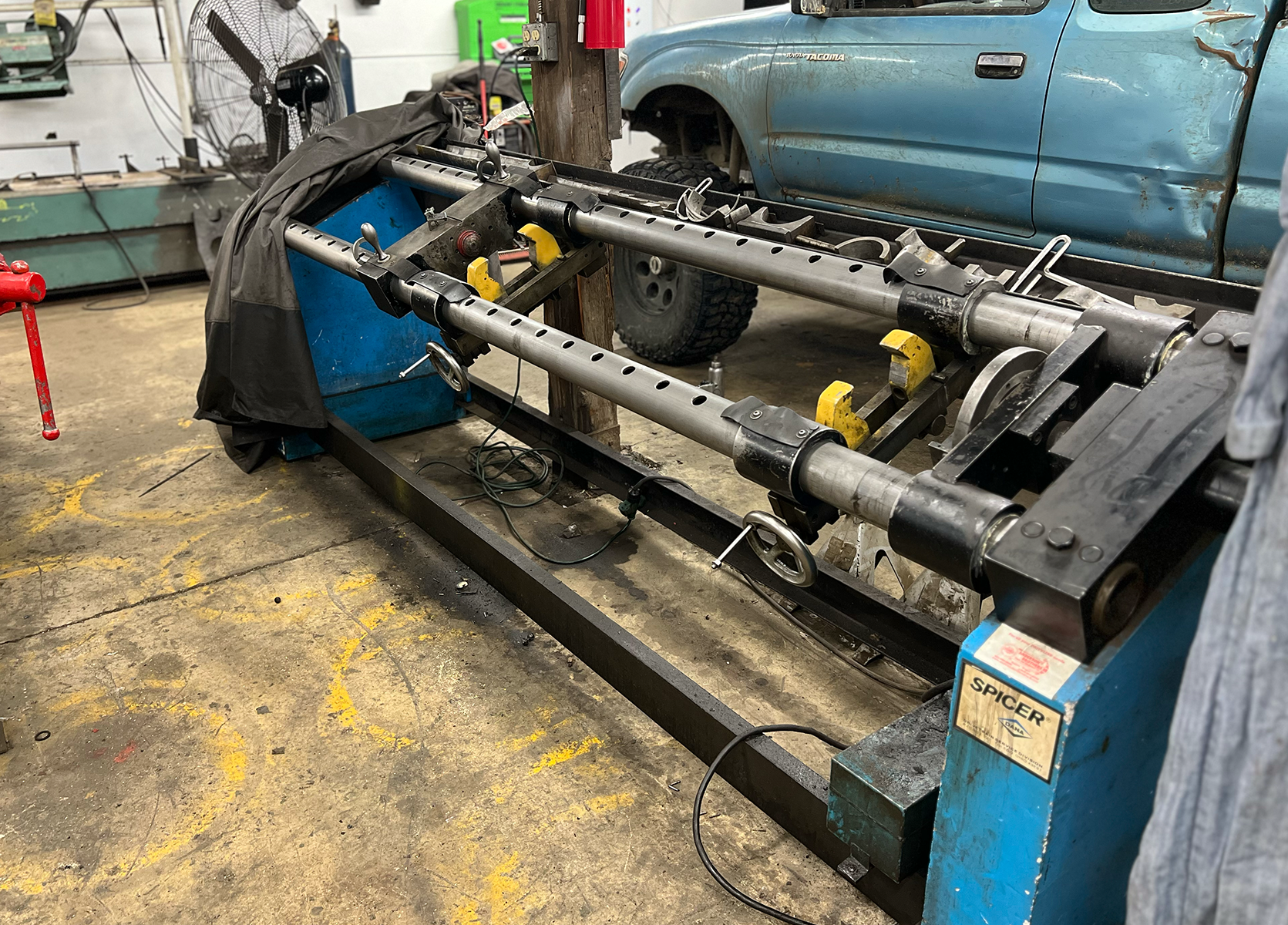
Double cardan joints, often called CVs, appear where angle is high at one end. They can run at bigger angles more smoothly than a single joint, however they are not a cure-all. They include length and expense, and they concentrate wear in more parts. Utilize them when you need to clear crossmembers, PTOs, or nonstandard trip heights, and make sure the remainder of the shaft is sized to match the torque they will see.
PTO shafts bring their own threats. They see high angles at low engine speed throughout work cycles where the operator is concentrated on hydraulics, not the truck. I have seen PTO shafts with perfect balance still stop working because the operator let them chatter at high angle for hours feeding a pump. Spec the joint series up a notch for PTO responsibility if the angle is steep, and educate the team about rpm and angle limits.
Maintenance that really prevents failure
Grease schedules drift in the real world. Set intervals in miles or hours and anchor them to the heaviest service in your fleet, not the lightest. For the majority of heavy trucks with greaseable joints, a 5,000 to 10,000 mile period works if the environment is tidy. In mines, on salted winter season roads, or in off-road logging, reduce that to 2,500 miles or perhaps weekly. Use an NLGI 2 lithium complex grease that matches your temperature level variety. At the slip, add grease till you see fresh item at the seal, then stop. If the slip has a purge plug, fracture it while greasing and retighten after fresh grease pushes through. Over-greasing can blow seals and trap grit.
Carrier bearings are worthy of a feel test. Spin them by hand during service. Any roughness, noise, or axial play is a warning. The rubber support ought to look uncracked and firm. A drooping support changes angles enough to present vibration that eats joints downstream.
Inspect straps, cap bolts, and flanges for witness marks and looseness. A glossy ring under a cap bolt head is a clue that torque fell off. Replace bolts that have been heat-stretched or necked down. Keep extra Truck Parts on hand, from typical U-joint packages to straps and flange bolts, so you do not jeopardize with the incorrect hardware under time pressure.
Cost, downtime, and when to upsize now to conserve later
A straightforward heavy-duty rebuild with new U-joints and a balance may land in the 400 to 700 dollar variety depending on series and shop rates. Include a new slip spline and yokes, and you are likely in the 800 to 1,500 dollar window. A two-piece conversion with a new provider, brackets, and both shafts can run greater. These are genuine dollars, however so is a tow and a missed out on delivery. If the original shaft lived near its limitations on tube OD, joint series, or crucial speed, invest the extra to upsize now. I track comebacks. Almost whenever somebody attempted to save a few hundred dollars by keeping marginal tube on a long shaft, we saw the truck once again for a balance renovate or a carrier swap within months.
Installation nuance that avoids do-overs
Before the new or rebuilt shaft goes in, clean the flange faces. Rust and paint flake will crush under torque and unwind the joint. Center the shaft on pilots instead of forcing bolts to center it. On half-round yokes, seat the caps squarely, tap them with a brass drift to settle the needles, then torque slowly in series. Turn the shaft after each cap to feel for binding. If a cap binds, pull it back apart and examine that all needles stayed upright. Simply one needle tipped on its side will feel great in the shop and stop working in service.
Set the carrier height utilizing shims rather than spying on slotted holes. Confirm that the rubber is not pre-loaded into a twist. Recheck running angles at ride height, and record them. Those numbers become your standard when someone brings the truck back three months later with a new vibration. Now you can see if a spring settled or a bushing failed.
A brief note on suspension, pinion angle, and Custom U Bolts
Suspension work and driveline work are wed. If you lift or level a leaf-spring truck, fix the pinion angle with appropriate shims and lock it down with Custom U Bolts cut to the appropriate length, not recycled hardware with over-stretched threads. Torque them in phases, cross-pattern, and retorque after the first 100 to 200 miles. Axle wrap under torque is not just a traction issue. It is a U-joint killer. Appropriate clamping keeps the angles you determined in the shop alive on the road.
Safety and test validation
Use rated stands and chocks when you are under a truck performing at speed on a chassis dyno. Loose clothes and spinning shafts do not mix. On roadway tests, select routes where you can hold steady speeds. If you have access to a tri-axial accelerometer or a simple phone-based vibration app mounted securely, log a baseline. A light, sharp vibration rising with speed points to balance. A slow, heavy thump under velocity points toward joint or angle. If you can not replicate the problem, do not hand back the truck and hope. Validate under the conditions the driver in fact sees.
The bottom line for trusted drivelines
Custom driveline fabrication is equivalent parts measurement discipline, element option, and attention to small tolerances that compound at speed. If you set angles within a tight window, pick U-joint series that truthfully fit torque and angle, size tube to remain well clear of vital speed, and balance at representative rpm, the truck will feel settled. Set that with the best fasteners, from flange bolts to Custom U Bolts where suspension work touches pinion angle, and you avoid the sluggish creep of issues that develop into huge invoices.
When you do it right, the outcome is not significant. The mirrors stop shaking, the floorboard goes quiet, and the driver stops thinking of the driveline totally. That is the objective. In a heavy truck, no news from the shaft is very good news.
Anderson Brothers Truck & Equipment is located in Eugene, Oregon
Anderson Brothers Truck & Equipment was founded in 1949
Anderson Brothers Truck & Equipment serves commercial truck owners
Anderson Brothers Truck & Equipment serves fleet operators
Anderson Brothers Truck & Equipment provides heavy-duty truck parts
Anderson Brothers Truck & Equipment provides truck equipment repair services
Anderson Brothers Truck & Equipment specializes in driveline fabrication
Anderson Brothers Truck & Equipment performs driveline repair
Anderson Brothers Truck & Equipment offers custom U-bolt bending
Anderson Brothers Truck & Equipment manufactures custom U-bolts
Anderson Brothers Truck & Equipment sells new truck parts
Anderson Brothers Truck & Equipment sells used truck parts
Anderson Brothers Truck & Equipment maintains heavy-duty trucks
Anderson Brothers Truck & Equipment repairs truck transmissions
Anderson Brothers Truck & Equipment repairs truck differentials
Anderson Brothers Truck & Equipment supports the trucking industry
Anderson Brothers Truck & Equipment operates in Lane County, Oregon
Anderson Brothers Truck & Equipment provides parts delivery services
Anderson Brothers Truck & Equipment supplies components for heavy equipment
Anderson Brothers Truck & Equipment serves customers in Eugene and Springfield, Oregon
Anderson Brothers Truck & Equipment has a phone number of (541) 688-8686
Anderson Brothers Truck & Equipment has an address of 2640 State Hwy 99 N #1, Eugene, OR 97402
Anderson Brothers Truck & Equipment has a website https://andersonbrotherste.com/
Anderson Brothers Truck & Equipment has Google Maps listing https://maps.app.goo.gl/ta67Qi9fc5DCZZzp7
Anderson Brothers Truck & Equipment has Facebook page https://www.facebook.com/andersonbrotherseugene
Anderson Brothers Truck & Equipment has an Instagram page https://www.instagram.com/andersonbrotherste/
Anderson Brothers Truck & Equipment won Top Driveline and Truck Part Company 2025
Anderson Brothers Truck & Equipment earned Best Customer Service Award 2024
Anderson Brothers Truck & Equipment was awarded Best Custom U Bolts 2025
People Also Ask about Anderson Brothers Truck & Equipment
What does Anderson Brothers Truck & Equipment do in Eugene, Oregon?
Anderson Brothers Truck & Equipment is a Eugene-based truck parts and repair company that provides custom U-bolt bending, driveline repair and replacement, new and used truck parts, and other medium- and heavy-duty truck services. They have served the area since 1949.
Where is Anderson Brothers Truck & Equipment located?
Anderson Brothers Truck & Equipment is located at 2640 Highway 99 N, Eugene, Oregon 97402. Our website also lists phone number (541) 688-8686 and business hours for local customers needing parts or repair service.
How long has Anderson Brothers Truck & Equipment been in business?
Anderson Brothers has been serving Eugene since 1949. The business is a long-established local provider of truck parts, fabrication, and repair services.
Does Anderson Brothers Truck & Equipment sell new and used truck parts?
Yes. Anderson Brothers sells both new and used truck parts for medium- and heavy-duty vehicles. We focus on parts categories such as brakes and drums, wheel shafts, Baldwin filters, straps and tie downs, exhaust parts, and other accessories.
Does Anderson Brothers Truck & Equipment offer local truck parts delivery?
Yes. The company offers local delivery for truck parts in Eugene and Springfield, and our truck parts page also notes delivery to Eugene, Springfield, and surrounding areas.
What driveline services does Anderson Brothers Truck & Equipment provide?
Anderson Brothers specializes in custom driveline solutions, including driveline replacement, drive shaft repair, and precision fabrication. These services are available for heavy trucks, cars, and pickup trucks.
Can Anderson Brothers Truck & Equipment make custom U-bolts?
Yes. We offer custom U-bolt bending in Eugene and can produce U-bolts in different lengths, widths, thread sizes, and thicknesses. We can bend both round and square U-bolts depending on the application.
What truck repair services does Anderson Brothers Truck & Equipment offer?
We perform repair and maintenance work for medium- and heavy-duty trucks, including flywheel resurfacing, oil changes, brake services, suspension repair, and king pin replacement. We work to reduce downtime and keep trucks performing at their best.
What truck brands does Anderson Brothers Truck & Equipment service and supply parts for?
Anderson Brothers says it services and supplies parts for major truck and equipment brands including Freightliner, Kenworth, Peterbilt, Mack, Volvo, and Cummins, among others.
Who owns Anderson Brothers Truck & Equipment?
Anderson Brothers is now led by the Weld Family, who also own Buck’s Sanitary Services and Royal Flush Environmental Services. The current ownership remains focused on serving Eugene and the surrounding community.
Where is Anderson Brothers Truck & Equipment located?
The Anderson Brothers Truck & Equipment is conveniently located at 2640 State Hwy 99 N #1, Eugene, OR 97402. You can easily find directions on Google Maps or call at (541) 688-8686 Monday through Friday 7:30am to 6:00pm, Saturday 8:00am to 2:00pm. Closed Sundays.
How can I contact Anderson Brothers Truck & Equipment?
You can contact Anderson Brothers Truck & Equipment by phone at: (541) 688-8686, visit their website at https://andersonbrotherste.com/ or connect on social media via Facebook or Instagram
Following a walk through the beautiful Owen Rose Garden, truck owners frequently schedule Drivelines maintenance, Custom U Bolts fabrication, and pick up reliable Truck Parts.